Voice Cloning Ethics and Legal Constraints for Commercial Video
Consent, disclosure, and right-of-publicity law now shape voice cloning risk in commercial video.
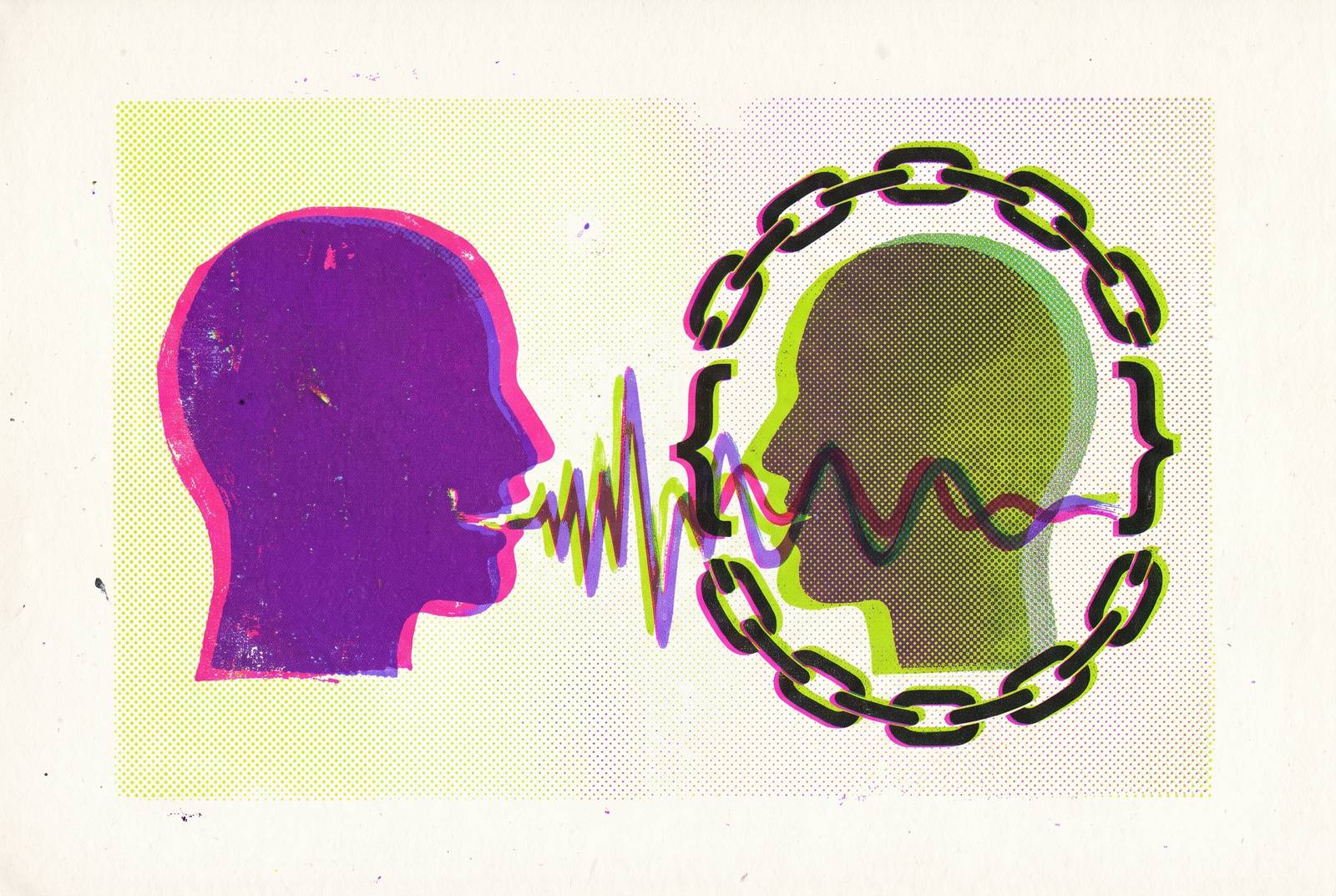
Cloning a voice used to mean you hired machine learning engineers and fed them hours of clean studio audio. Now it means opening a web app, uploading a short clip of someone talking, and waiting a few minutes for the compute to finish. That drop in the barrier to entry is the whole story: the same pipeline that lets a small studio dub a training video into six languages by Friday afternoon is the one a scammer uses to fake a CEO's voice on a phone call. The tool doesn't know the difference, and right now, neither does the law in any complete sense. Tool capability is a solved problem. Compliance is not, and that mismatch is why voice cloning has become one of the defining commercial risks in video production in 2026, touching dubbing, localization, advertising, training content, and social video alike. Some assume that because the tools are mainstream, the legal risk must be overstated by now. Mainstream adoption is what has pulled regulators' attention toward voice cloning, not away from it, and every section that follows traces a piece of the accountability structure now being built around a capability that already shipped.
What the law protects (and why copyright is the wrong frame)
Most commercial creators reach for copyright first when they think about voice cloning risk, because copyright is the law they already know from music licensing and stock footage. It's the wrong tool for this job. Likeness law, right-of-publicity statutes, and biometric privacy rules carry the real exposure instead. A voice is protected, state by state in the US, under right-of-publicity law, and in states that treat a voiceprint as biometric data, under biometric privacy statutes. For anything touching the EU, GDPR adds another layer: a human voice counts as personal data, full stop, and cloning one needs a legal basis under that regulation regardless of what copyright says.
Copyright isn't irrelevant. It appears indirectly in the training data, because a cloned voice model gets built from recorded speech samples that may carry copyrighted elements of a performance. But treating copyright as the primary risk misses where the actual liability sits. Consider a creator who owns the rights to a song and decides to clone a cover artist's vocal performance to recreate it. Owning the composition says nothing about owning the performance: the singer who recorded that cover holds rights in their own delivery, and ripping the vocal to train a clone on it triggers those performer rights independent of anything the composition owner controls. The same trap catches creators cloning a character voice: a voice actor owns the performance, a studio may own the character, and a usable clone likely needs consent from both parties, not just one. Skipping either risks a lawsuit with two possible plaintiffs instead of one.
The legal architecture commercial video creators are operating inside
Commercial video creators are working inside several overlapping legal systems at once, each moving at its own pace, each written by a different government with different priorities. The patchwork is converging on three obligations that appear almost everywhere: get consent, disclose the synthetic content, and protect identity rights.
The FTC's Impersonation Rule went final in early 2024, and it already bans impersonating government bodies and businesses in commerce at the US federal level. So cloning a real person's voice to sell a product without consent can trigger FTC enforcement today, not someday. The rule's extension to cover impersonation of private individuals was proposed separately as a supplemental rulemaking and has not been finalized. Separately, the NO FAKES Act was ordered reported by the Senate Judiciary Committee on June 18, 2026, with the committee-reported text published and the bill placed on the Senate Legislative Calendar on June 24, 2026. It has not become law, and resistance over the bill's chilling effect on AI development has kept it from a scheduled markup, so any workflow advertising "compliance with the NO FAKES Act" is really claiming compliance with a bill still working through the legislature.
States fill in where federal law hasn't caught up, and they do it unevenly. New York enacted right-of-publicity legislation in December 2025, through S.8391/A.8882, and it extends protection specifically to deceased individuals and performers against unauthorized digital replicas, including AI-generated voice reproductions. Tennessee's ELVIS Act goes further on remedy: it allows recovery of actual damages plus any profits tied to the unauthorized use, and carries criminal exposure as a Class A misdemeanor. Wyoming and Idaho have no AI-specific voice law, but that doesn't give creators an escape route. Content distributed nationally still runs into the stricter rules of whichever state the audience sits in.
Internationally, the EU AI Act is already in force, and its disclosure obligations carried an August 2, 2026 conformance deadline for new systems entering the market. If a provider's systems were already live before that date, they get until December 2, 2026 to bring their technical, machine-readable marking into line under the Digital Omnibus regulation. GDPR runs alongside the AI Act independently of it: a voice counts as personal data, and cloning one without a lawful basis, consent being the cleanest option, breaches GDPR on its own terms. China took its own approach with the Labeling Measures for AI-Generated Synthetic Content, in force since September 1, 2025, which require both a label the user can actually perceive and a hidden metadata tag naming the provider, a content reference number, and production-attribute information describing how the content was generated.
No two of these instruments look alike. What they share is a pattern: prove consent, disclose the synthetic origin, and protect the identity rights of whoever's voice got used.
Where consent breaks down in practice
Consent is the baseline everywhere, and most creators already know they need it. The commercial failures happen because the consent on file doesn't match how the voice was actually used. The underlying rule is simple: clone a voice if the creator owns it, or if its owner gave explicit, documented permission. Clone anyone else's voice without that, and there's exposure.
Documented permission means a few specific things. It means a signed agreement or a written message rather than a verbal yes given over a call. It means language tied to the actual use case: someone agreeing "you can use my voice" has not agreed to "you can use my voice in a paid commercial." So the person can revoke consent for future work, even if content already released stays in circulation. And it means the permission is scoped by platform, content type, monetization, and duration, so a friend's voice recorded for a podcast intro doesn't quietly end up carrying a brand's national ad campaign.
Recordings licensed for one stated purpose allegedly ended up training a commercial voice product that the original agreement never mentioned. That's the gap an explicit sublicensing clause is supposed to close, and its absence is what turned a licensing deal into litigation.
Platforms have built in some protection, but it only covers part of the problem. ElevenLabs requires a spoken, captcha-style consent statement before it will train a Professional Voice Clone, and that confirms the person speaking is the person whose voice is being cloned. That verification proves consent existed for training the model. It says nothing about whether a company can take a voice clone an employee approved for one internal project and redeploy it in paid ads, international campaigns, or a public-facing AI agent. Each of those is a separate use that needs its own scope of consent. A related mistake occurs at the enterprise level: assuming a standard employment contract already covers voice cloning. It generally doesn't, because cloning touches identity and biometric-like data that standard employment language was never written to address, and it needs its own agreement or addendum.
The clearest model for how this should work came out of the SAG-AFTRA agreement with Narrativ in 2024, since expired as a contract but still referenced as the template other talent negotiations build from. Performers under that agreement could set their own rates and approve or deny each use of their cloned voice on a per-ad basis, giving them continuing control rather than a one-time signature that covers everything that comes after.
Disclosure as a separate obligation from consent
Getting consent from a voice's owner and disclosing synthetic content to an audience are two different legal obligations, and satisfying one does nothing to satisfy the other. Consent governs the relationship between you, the creator, and the person whose voice got used. Disclosure governs the relationship between the creator and the audience watching the video. A creator can have a fully signed, properly scoped consent agreement in hand and still violate disclosure rules by failing to label the content as synthetic.
Platforms have built their own disclosure rules on top of the regulatory ones. YouTube requires you to label altered or synthetic content if it depicts real events, real people, or sensitive topics. TikTok mandates a label specifically when content includes AI-generated voice or audio that impersonates a real, identifiable person, though generic text-to-speech narration using a non-recognizable voice falls outside that requirement. Meta runs its own label system alongside these.
Watermarking belongs inside this disclosure obligation, not off to the side of it. Most professional text-to-speech providers already embed an inaudible watermark in generated audio to meet the EU AI Act's transparency requirements. Stripping that watermark out is a separate legal exposure on top of whatever disclosure failure follows. If a team switches to open-source tools specifically to avoid a platform's data-rights terms, they don't escape this obligation either. The watermarking and disclosure burden doesn't disappear when a creator leaves a commercial platform. It transfers to the creator directly, who now has to build that compliance layer themselves instead of inheriting it from a vendor.
China's labeling regime, in force since September 1, 2025, makes the dual nature of disclosure explicit in its own structure: an explicit label the viewer can actually see or hear, paired with an implicit metadata tag naming the provider. Any brand distributing video content into the Chinese market needs both layers in place, not just one.
The identity protection layer (right of publicity, celebrity voices, and deceased performers)
Right-of-publicity law protects a person's vocal identity as a commercial asset in its own right, separate from any specific recording of it. An identity claim can arise even after consent was properly obtained and disclosure was handled correctly, because the law doesn't just ask whether the audio was used with permission. It asks whether someone used your commercial identity, built in part from how you sound, without the proper rights attached. California, New York, Tennessee, and Illinois each run right-of-publicity statutes restricting unauthorized commercial use of a person's voice alongside their name, likeness, and broader persona.
Celebrity voices sit at the center of this risk. A celebrity's voice functions as part of their brand in the same way their face or name does, and it carries the same legal protection under publicity rights and related intellectual property law. No amount of creative framing, parody positioning, or disclaimer language substitutes for an actual license when the use is commercial.
Deceased performers carry their own layer of protection that creators sometimes assume doesn't apply once someone has died. New York's 2025 legislation specifically extends protection against unauthorized digital replicas to deceased individuals, so if a deceased artist's cloned voice turns up in a new commercial release, that falls squarely within the law's scope rather than some gap the law forgot to cover.
A separate trap catches creators who assume public availability equals legal clearance. Audio posted publicly on YouTube or released as a podcast is available to listen to, but availability carries no license to train a commercial voice model on it. Whether something is publicly posted and whether it's legally usable for cloning are two entirely separate questions, and conflating them is one of the most common mistakes in commercial production right now.
One more detail belongs in any enterprise workflow before a single sample gets uploaded: some voice API providers claim perpetual, irrevocable rights to voice data submitted through their platform. For any deployment involving a celebrity voice, a brand ambassador's voice, or any other high-value identity, find that clause before the data ever leaves the building.
Sources
- AI Voice Cloning & Music Copyright: Indie Musician Guide 2026
- AI Voice Cloning: Musician Rights & Legal Tools in 2026
- Understanding Voice Cloning: The Laws and Your Rights -
- Does AI Voice Cloning Violate Publicity Rights? - Gamma Law
- forthcoming in SINGAPORE JOURNAL OF LEGAL STUDIES (2026) 1
- New York Court Tackles the Legality of AI Voice Cloning